
|
    Professional Email Marketing Solutions |
Why $200 Isn't Enough to Secure The #1 Spot on Google Anymore
Author: techtage

From a spam-beating standpoint, Penguin 2.1, which was announced on October 5 on Twitter by Matt Cutts, was a really effective tweak to the existing Penguin algorithm that imposes page or site-wide penalties on websites that involve in paid link building schemes.
From what I noticed, one thing about Penguin 2.1 that looks interesting to me is its ability to prevent sites from ranking on the first page even for short periods of time without using extremely high-quality and costly black hat methods. I actually ran a test and my anticipations were just about proven to be right.
I had a fresh, .com spare domain lying around, so I used it for testing the real-world effectiveness of Penguin 2.1. I basically did the entire link building the following way:
- I built 8 web 2.0 sites on platforms like WordPress, Tumblr and Rebelmouse. I took perfectly readable 400+ words posts from article syndication sites and spun them using WordAi (that's the article spinning tool that claims to use artificial intelligence in the process to produce perfectly readable outputs). I then posted them (1 unique spun post per web 2.0 site).
- I linked to the homepage (less) as well as the internal pages (more), already set up using manually posted content. I made sure I linked to a lot of other sites from the posts including Wikipedia and a ton of other high-authority sites as well as related high-authority sites (I had nothing against the competition because this was just a test).
- Now, for the tier 2 stuff, I used WordAi again to generate spun articles with spintax. I then used Link Emperor to build just private network links using the spun articles. The anchor-text settings were almost, 50% exact-match, 25% with a prefix or suffix and 25% completely random anchor texts like 'click here' and 'read more'.
Considering the combined cost of around $200 of the monthly subscriptions of both WordAi and Link Emperor, this was actually a fairly costly campaign for any site.
Now, I set the site up just after Penguin 2.1 was unleashed. I kept posting new content to the tier 1 web 2.0 sites to make them look natural. The domain had a PR of 2 and a DA of over 40. So, one fine morning I decided to take a look at my rankings.
Before Penguin 2.1, I'd have been sure to hit the first page and stay there at least for a month even if I did the crappiest spinning and left a lot of footprints. But you know what happened in this case?
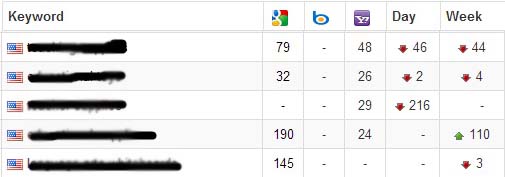
It never hit the first page!
So, for the first time ever, I think Google have finally managed to teach their penguins how to catch dirty link builders the instant they've done something. Algorithmically catching tier 2 links with simulated to be natural anchor-texts amidst numerous paragraphs of related text on private blog networks? When did that happen in the last 5 years?
Another impressive part is, the keywords weren't even competitive. The most popular one among them had like 200 exact-match searches per month at most.
Conclusion
It seems as though with Penguin 2.1, Google have finally mastered the art of catching clever spammers with their bare hands (anti-webspam algorithms). It's not only harder than ever to sustain high rankings gained through shady link building, it's now significantly harder to get to the first page, even with a decently powerful domain, in the first place.
Do you think Google have finally nailed it with Penguin 2.1?
Related Posts:

Leave a Reply

-SL, Association VP