|
Repost: Read original and complete article here
In the brief amount of time I've spent doing outreach for link building, my approach and strategies have evolved. In my early days, I was over-eager and optimistic, crafting drawn-out messages and patiently waiting for the links to come flooding in. To continue with the theme of classic television sitcoms, I was the Richie Cunningham of link building: wide-eyed, naïve, and mistake-prone. I'd like to think my style has evolved to a worldlier, Fonz-like confidence.

There is a lot of discussion about which link prospecting strategies work, but the outreach email is where the link is won or lost. Even with all the research and personalization in the world, you'll never convert if you don't get the communication right.
We've created an instructographic with some basic tips to help you craft effective outreach emails and make sure your link building campaign doesn't jump the shark.
Share it:
Get a branded email address
Your email address and name are the first potential signs of trust or value the target recipient will see. Link building is really "relationship building," so it's important to show the recipient you're a real person rather than a "Press" or "Web Team" blasting out link requests. If you're doing outreach for a client, try to get an address with their domain in it—especially if the brand is recognizable.
Conventional wisdom suggests that if you use a sexy lady's name like "Alexya" or "Francesca," you'll get a better response rate. In my experience, this simply isn't true and, frankly, it makes your message look spammy.
This also means throwing away your Gmail address. If you've ever tried to sell anything through Craigslist, you'll know from experience how wildly spammy an unsolicited message from a Gmail address can look out of context:
Are you going to open a message from this guy? I didn't think so.
Contact the right person
This might seem like a no-brainer, but the bigger the website or organization, the more difficult it is to target the right person. Get the email to the individual who can most likely execute your desired action.
Further, anticipate the level of knowledge or control your target has over the website. If you're contacting a department webmaster, he or she will know how to correct a broken link but may not have any influence regarding editorial decisions for adding your link. Alternatively, if you're contacting a marketing executive or the director of an academic department at a college, they might not know a redirect from a server log. Broken link building is one of my favorite techniques, but it will only work if the recipient knows or cares what a broken link is.
Lastly, it's absolutely essential to personalize the salutation. If you have to send it to a general editor or department, at least put the name of the site or organization in the greeting.
Utilize the subject line
Use an enticing subject line, but don't try to be sneaky. Bloggers and webmasters are well-accustomed to subject lines like "Question about domain," only to be hit with a poorly executed link request.
I like this advice from SEER's Ryan O'Connor: use the target's name in the subject line and form it as a question. It has the potential to look spammy, but it's a great way to stand out in a sea of unread emails.
Be brief. Be significant.
Keep your emails brisk and specific. My goal for the first email is never to get a link—I just want a response. I want to show the person I've done my homework on his or her site and have demonstrated why the content is relevant and valuable. Peter Attia is a big proponent of short and sweet outreach emails.
Matt Gratt wrote a great article on how outreach emails should be personalized, positioned, and persuasive, and he referenced an email from clueless link builder "Linda" that's shockingly similar to an email Portent received. Here's ours (sensitive information is redacted with pastel swirls):
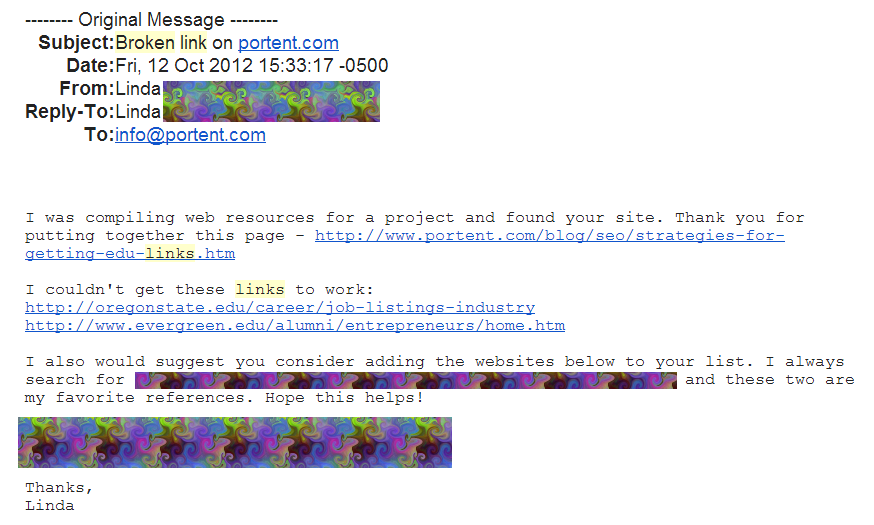
I actually appreciated that she pointed the broken links in my blog post, and I would have totally replaced those with a link she suggested… except the links were utterly unrelated to the post's content. Whoops.
Make it easy for the recipient to understand your desired action. Be clear, but don't be pushy. Instead of, "Put the link on your page with anchor text 'inevitable Penguin penalty,'" try "Would you consider including our article in your weekly news roundup?"
The best example of this I've seen is from James Piper's blog post that references a message from Distilled's Rob "Stenton" Toledo: it's personal, direct, and encourages conversation. It's so good that I printed it out and pinned it to my cubicle wall for daily reference.
Use an appropriate signature
The signature must match the tone and intent of your message. If you're contacting a blogger, you might forgo the including a title and brand logo in the signature for a more casual style. Alternatively, if you're trying to get the attention of an influencer or company executive, including a title could add trust and authority to your message.
Like the email address, I'd shy away from including anything related to "marketing" or in your signature. If you do include a title, try "outreach coordinator" or "community manager."
Don't mention "links."
Lastly, but perhaps most importantly, don't even mention "links." Jon Cooper is exactly right: be mindful of the connotations your words carry. It's better to ask someone to "share" or "include" something in a resource list, or "cite" a page for an article, rather than "link to" a "piece of content."
Are You More like Richie or the Fonz?
What strategies do you use to get your emails to convert? Which elements do you consider most important for an email to have?
|